
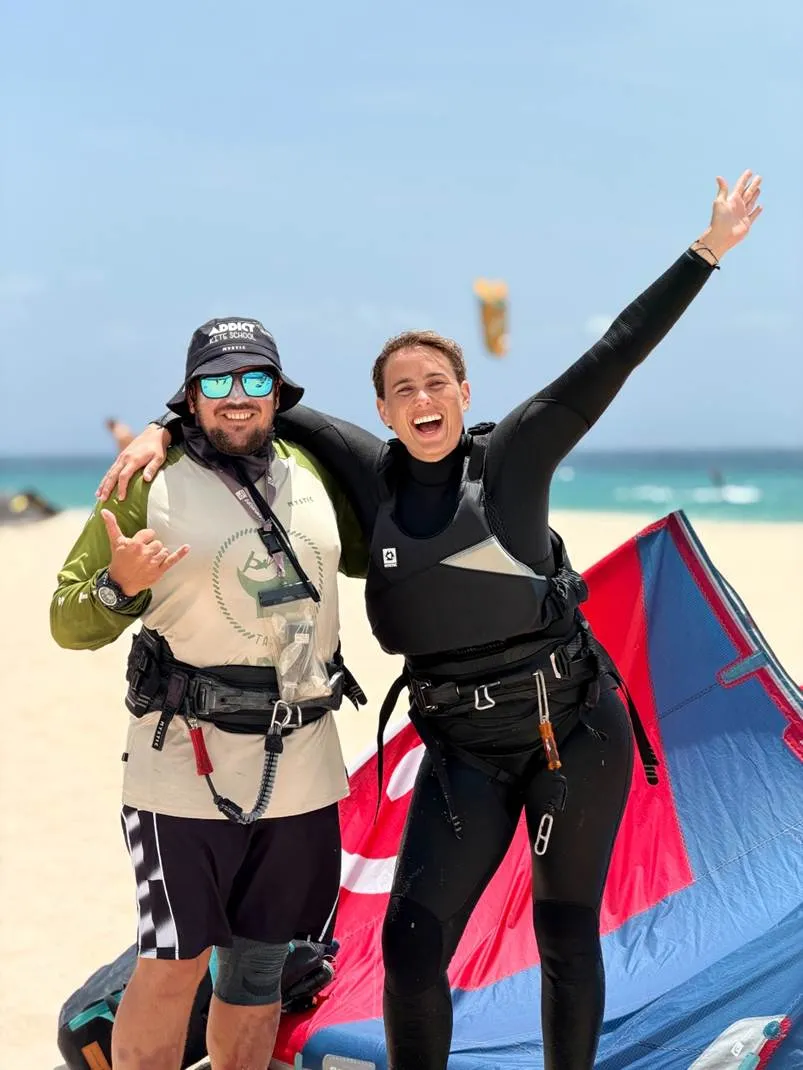
Planning a kitesurfing trip to Tarifa is a little different from planning a normal beach holiday. The wind plays a major role in your schedule, your choice of lessons should match your experience, and choosing the right location can make your stay much easier.
Located in southern Spain at the Strait of Gibraltar, Tarifa is one of Europe’s best-known kitesurfing destinations. Its two prevailing winds, Levante and Poniente, create a long kitesurfing season and attract beginners, intermediate riders and experienced kiters from around the world.
So, how do you plan a kitesurfing trip to Tarifa? Start by choosing the right time of year, book lessons according to your level, allow some flexibility for the wind and choose accommodation that makes getting to the beach easy.
When Is the Best Time to Go Kitesurfing in Tarifa?
Tarifa has a long kitesurfing season, generally running from spring through autumn.
The two main winds are the Levante, which comes from the east, and the Poniente, which comes from the Atlantic. They can create very different conditions, and neither wind is guaranteed on a particular day.
The busiest period is generally during the summer, particularly around July and August. June and the early autumn months can offer a different atmosphere, while September and October remain popular with riders looking for warm weather and good opportunities to get on the water.
There is no single month that guarantees perfect kitesurfing conditions. If your trip is short, the most important thing is to leave some flexibility in your schedule rather than planning every day around a fixed lesson time.
How Many Days Do You Need for a Kitesurfing Trip to Tarifa?
The ideal length of a kitesurfing trip depends on your level and what you want to achieve.
For a complete beginner, five days of kitesurfing lessons is a good starting point. It gives you several consecutive days to build the fundamentals progressively, practise the skills you learned and adapt to the conditions. It does not guarantee that every student will become fully independent in five days, but it provides a solid amount of time to make meaningful progress.
For an intermediate rider, fewer days may be enough if the goal is to work on a specific skill such as riding upwind, improving transitions or learning to jump.
The important thing is to allow enough flexibility for the wind. Kitesurfing lessons depend on suitable conditions, so a five-day course does not necessarily mean five consecutive days on the water.
At Addict Kite School, lessons are organised according to the forecast and the conditions expected for the following day. This allows instructors to choose an appropriate time and location rather than trying to force a lesson into a fixed schedule.
How Should You Choose Kitesurfing Lessons in Tarifa?
The right lesson format depends on your experience.
Complete beginners generally need to build the fundamentals progressively, starting with kite control and safety before moving into body dragging, water starts and board riding.
Intermediate riders have different needs. If you can already ride independently, repeating beginner exercises may not be the best use of your time. Instead, your instructor can focus on the specific skills you want to improve.
For example, an intermediate course might focus on:
• riding confidently upwind
• improving transitions
• toeside riding
• jumping technique
• board control
• developing confidence in stronger wind
• preparing for different riding conditions
If you are already riding independently and want to progress, intermediate and advanced kitesurfing lessons in Tarifa can be structured around your current level rather than starting again from the beginning.
Where Should You Stay in Tarifa?
Where you stay depends on the type of trip you want.
Staying in or near the old town gives you easy access to restaurants, cafés, shops and Tarifa’s evening atmosphere. Staying closer to the beaches can reduce the amount of driving or cycling required each day.
Los Lances is one of the main kitesurfing areas around Tarifa, and many lessons take place in this area depending on the wind, tide and local conditions.
A rental car can also be useful, particularly if you want the flexibility to explore the surrounding coastline or if your lesson location changes according to the wind.
For a short kitesurfing trip, reducing unnecessary travel can make a noticeable difference. The less time you spend moving equipment around, the more time you have to rest and enjoy the town.
What Should You Pack for Kitesurfing in Tarifa?
Tarifa can be warm and sunny, but the conditions on the water can feel very different from those on the beach.
A wetsuit suitable for the season, a rash guard, sunscreen and sunglasses are useful basics. Your exact wetsuit thickness will depend on the time of year and your sensitivity to cooler water.
If you are taking lessons, you generally do not need to travel with a complete kite setup. The equipment required for your lessons is provided by the school.
If you already own your own equipment, however, bringing it can make sense if you want to continue riding outside your lessons.
Should You Rent or Bring Your Own Kitesurfing Equipment?
If you are booking kitesurfing lessons in Tarifa, you generally do not need to bring your own equipment. The necessary kitesurfing equipment is included during Addict Kite School lessons, so beginners and intermediate riders can learn with equipment suited to their level and the conditions of the day.
For riders who are already autonomous and can safely manage their own sessions, Addict Kite School also offers kitesurfing equipment rental. This is a convenient option if you want to travel without carrying your own kite equipment or want to ride during additional days outside your lessons.
If you already own your own equipment, you can of course bring it with you. However, for anyone travelling to Tarifa specifically to take lessons, there is no need to transport a complete kite setup.
How Much Does a Kitesurfing Trip to Tarifa Cost?
The total cost depends on the length of your stay, accommodation, lessons, equipment and transport.
Group lessons are generally more affordable than private instruction, while private lessons provide more individual attention. If you are an autonomous rider, renting equipment for individual sessions is another option.
It is worth budgeting for more than just the lessons. Accommodation, food, transport and any additional equipment are the main expenses, and a small buffer is useful because the wind can occasionally prevent a planned session.
One advantage of Tarifa is that there is plenty to do away from the beach. The old town, surrounding countryside, restaurants and nearby attractions mean a no-wind day does not have to become a wasted day.
Should You Plan Rest Days?
Yes, especially if you are learning.
Kitesurfing uses your arms, shoulders, core and legs, and beginners can become tired quickly during the first few days. Fatigue can also affect concentration and technique.
Rather than trying to maximise every hour of your holiday, leave some flexibility between sessions. Your body may benefit from a quieter day just as much as it benefits from another lesson.
This is another reason not to plan a Tarifa trip around a completely fixed timetable.
What Can You Do in Tarifa on a No-Wind Day?
A no-wind day is a good opportunity to explore Tarifa and the surrounding area.
You can walk through the old town, visit local restaurants and cafés, explore the beaches, take a trip along the coast or discover some of the natural landscapes around the Strait of Gibraltar.
For visitors staying several days, nearby destinations can also be explored by car, including other towns along the Costa de la Luz and the area around Gibraltar.
The flexibility of the destination is useful because kitesurfing is naturally dependent on weather conditions.
What Should You Look for in a Kitesurfing School in Tarifa?
Price is only one factor when choosing a school.
Look at the instructor-to-student ratio, the type of equipment provided, the lesson format and how the school manages changing wind conditions.
For beginners and intermediate riders, it is also worth checking whether the instructor will adapt the lesson to your actual level rather than simply following a fixed programme.
Addict Kite School offers private, semi-private and small-group kitesurfing lessons in Tarifa. Group lessons are limited in size, while private and semi-private lessons allow instructors to provide more individual feedback. Radio communication can also be used during private and semi-private lessons.
Frequently Asked Questions About Planning a Kitesurfing Trip to Tarifa
Is Tarifa good for a kitesurfing holiday?
Yes. Tarifa has a long kitesurfing season, two prevailing winds, extensive beaches and a wellestablished kitesurfing community. It attracts everyone from complete beginners to experienced riders.
What are the main winds in Tarifa?
The two main winds are the Levante, which comes from the east, and the Poniente, which comes from the Atlantic. Their strength and direction can vary, so conditions should always be checked before planning a session.
Is Tarifa suitable for beginner kitesurfers?
Yes. Tarifa has numerous professional kitesurfing schools and large sandy beaches suitable for teaching, depending on the conditions and local regulations.
How many days should a beginner spend learning to kitesurf in Tarifa?
Five days is a good starting point for a complete beginner. It provides enough time to build the fundamentals progressively and practise them over several sessions. Individual progression varies, however, and five days does not guarantee that every student will become fully independent.
How far in advance should I book kitesurfing lessons in Tarifa?
During busy periods, booking in advance is recommended, particularly if you want private or semiprivate instruction or have specific dates. It is still important to keep some flexibility because the actual lesson schedule depends on the wind.
Do I need to bring my own kite equipment?
No. Kitesurfing equipment is included during Addict Kite School lessons. Riders who are already autonomous can also rent equipment from the school for independent sessions.
What happens if there is no wind?
Kitesurfing lessons require suitable wind conditions. If the conditions are not suitable, the lesson may need to be moved or cancelled according to the school’s terms. This is why flexibility is important when planning a short kitesurfing holiday.
Is Tarifa only suitable for advanced kitesurfers?
No. Tarifa is suitable for different levels, from complete beginners to advanced riders. The important factor is choosing lessons and locations appropriate to your experience and the conditions on the day.
Plan Your Kitesurfing Trip to Tarifa
A good kitesurfing holiday in Tarifa is not about trying to control every part of the itinerary. It is about choosing the right season, allowing flexibility for the wind, booking instruction appropriate to your level and giving yourself enough time to enjoy the destination.
Whether you are learning your first water start or working on your next transition, Tarifa offers the combination of wind, beaches, experienced schools and an international kitesurfing community that keeps riders coming back.
If you are planning your next trip and looking for kitesurfing lessons in Tarifa, Addict Kite School offers private, semi-private and small-group courses adapted to different levels and organised around the conditions of each day. Discover kitesurfing courses in Tarifa