
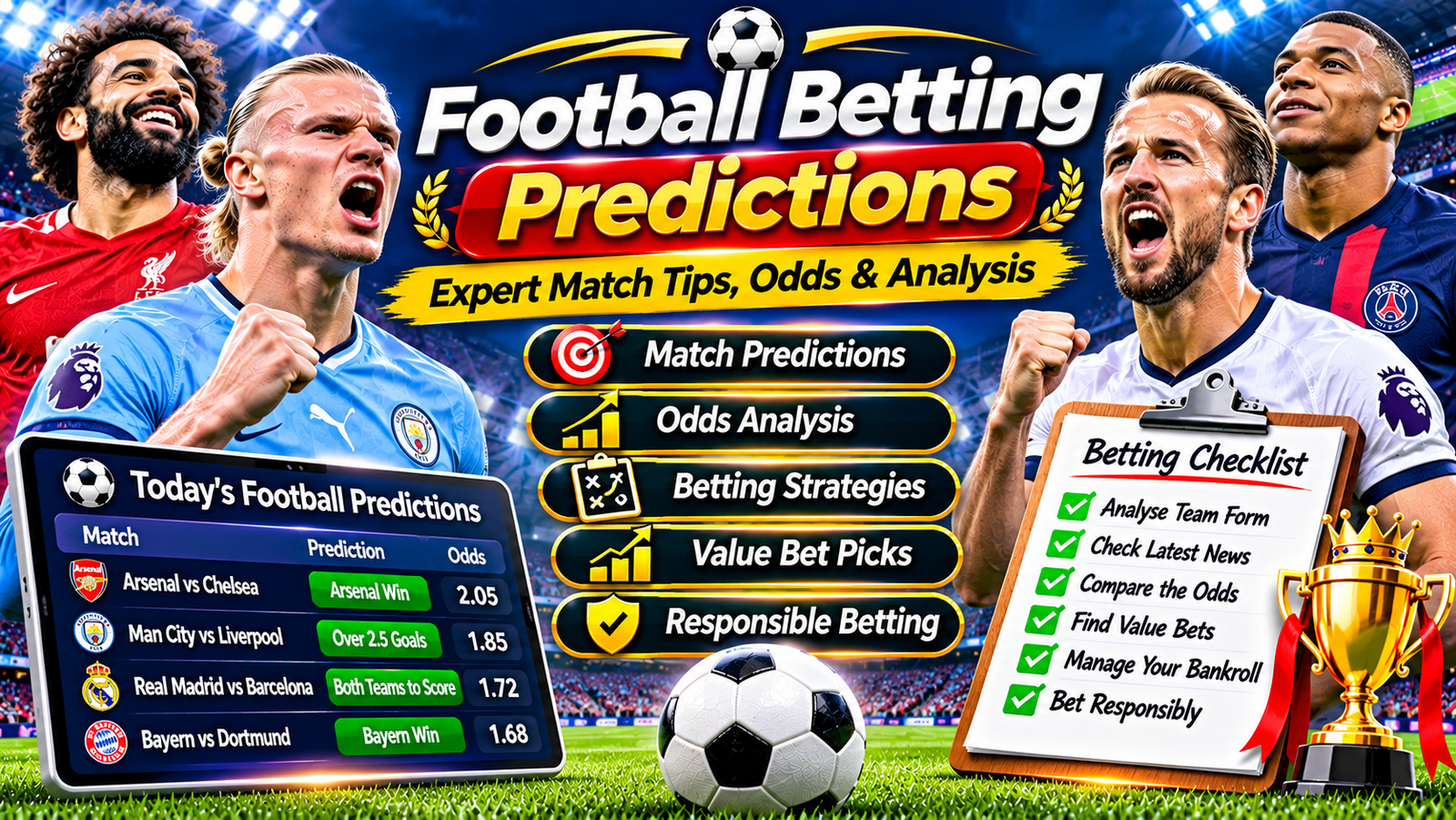
Build Predictions on Reliable Data, Not Hype
Start by collecting match context that usually stays stable across competitions, like team pressing intensity, shot quality, and defensive structure. Then compare those signals against opponent tendencies, because Football Betting Predictions a team’s style often changes the most when it faces a specific matchup. When you treat analysis as a process instead of a guess, your decisions become easier to defend and easier to repeat.
Quality also means you understand variance and how markets react. A strong team can “look” safe until a red card, an early goal, or a tactical tweak shifts the game plan. Instead of chasing narratives, map out what would need to happen for a bet to win—then check whether that scenario is plausible. This approach helps you avoid overreacting to highlights and keeps your bets aligned with how football actually evolves minute by minute.
Match Previews That Explain the Why Behind Each Pick
A trustworthy match preview breaks the game into clear betting lanes: overall control, chance creation, and finishing risk. Look at where goals typically come from for each side—set pieces, wing cutbacks, or central combinations—and then evaluate whether the opponent can disrupt that pathway. If one team consistently creates high-value shots while the other concedes them at a specific rate, the match preview should reflect that mismatch. The goal is to connect tactics to outcomes, not just list statistics.
Odds provide a second layer of confirmation, but they shouldn’t replace analysis. Compare your own probability estimate with the implied probability in the market, and look for mispricing where your evidence is stronger than the price. For example, if a team’s defensive block limits big chances yet the market prices them like they’re vulnerable, there may be value in a lower-risk market. If the market already accounts for the advantage, consider whether the bet still fits your risk limits.
Team Form Signals That Matter for Betting Markets
Form is more than results, and the highest-quality analysis treats it like a pattern. Track indicators such as possession efficiency, expected goals trend, and defensive recoveries, because these often predict future performance better than a short streak. Also watch for goal distribution—some teams win by controlling territory and grinding down opponents, while others rely on explosive transitions. Understanding the mechanism behind form helps you choose markets that match how the team actually scores and concedes.
Another trust-building step is identifying lineup stability and role changes. A team can show strong underlying numbers but still underperform if key defenders are replaced or if the primary chance creator is missing. Look for how the team adapts without its best passer or striker, because the drop-off can be visible in shot locations and buildup tempo.
Goal Markets, Safer Alternatives, and Responsible Betting
Goal markets often offer clearer decision rules because they connect directly to shot volume and finishing volatility. If both teams generate enough chances to sustain pressure, totals and “both teams to score” markets can reflect that reality. If one side struggles to break down compact defenses, consider markets that account for fewer high-quality chances, like a lower total line or a team scoring “under” scenario. The key is to align your goal market selection with how the match is likely to produce goal opportunities.
Responsible betting protects bankroll and reduces emotional chasing. Set a stake size you can afford to lose, and decide in advance how many bets you’ll place before you start. Avoid increasing stakes after losses, and consider using a small testing approach when you’re uncertain about lineups or motivation. If you’re using an odds-based strategy, track results and refine your assumptions rather than treating each bet as a standalone event.
Conclusion
When you focus on patterns such as chance quality, defensive structure, and tactical fit, you reduce the chance of being misled by short-term noise. Odds should support your view, not replace it, and your selections should match the way goals are likely to be created. Use these principles to build confidence in your process and improve decision quality over time. Combine goal-market logic with responsible bankroll management so your strategy stays sustainable, even during unpredictable matches. With consistent analysis and careful risk control, you can approach betting with more clarity, better expectations, and a stronger foundation for long-term results.