Why security education pays off for managed services
Security awareness training is more than a compliance checkbox—it’s a measurable way to reduce human risk across client environments. Many organizations invest in tools like firewalls and email security, but security awareness training companies attackers still rely on social engineering to bypass technical controls. Training helps users recognize manipulation tactics, making it harder for phishing and fraud attempts to succeed.
For MSPs, the benefits compound because one improvement can protect multiple endpoints, users, and business processes across a client base. When end users learn consistent behaviors, support teams see fewer help desk tickets tied to “suspicious email” confusion. That efficiency creates a practical ROI: lower incident response effort, fewer escalations, and a clearer path to demonstrating security value to clients.
What makes strong programs stand out: measurable learning
The best training programs focus on learning outcomes, not just content delivery. Look for anti-phishing training that simulates realistic scenarios and then reinforces correct actions immediately afterward. This approach anti-phishing training helps users connect the warning signs they observed to the steps they should take, such as reporting suspicious messages or verifying requests through approved channels.
Effective providers also offer reporting that helps you communicate progress to clients. Security metrics like click rates, report rates, and completion trends show whether training is changing behavior rather than simply reaching inboxes. For MSPs, these insights support quarterly business reviews and enable you to tailor next steps when certain user groups remain vulnerable.
How MSP-focused delivery improves adoption and scalability
MSPs need training that can scale across multiple clients without turning security education into a manual project. Multi-client management features reduce administrative overhead by centralizing user enrollment and content scheduling. When training is organized by client, you can align it with each organization’s risk profile and maintain consistent coverage across departments.
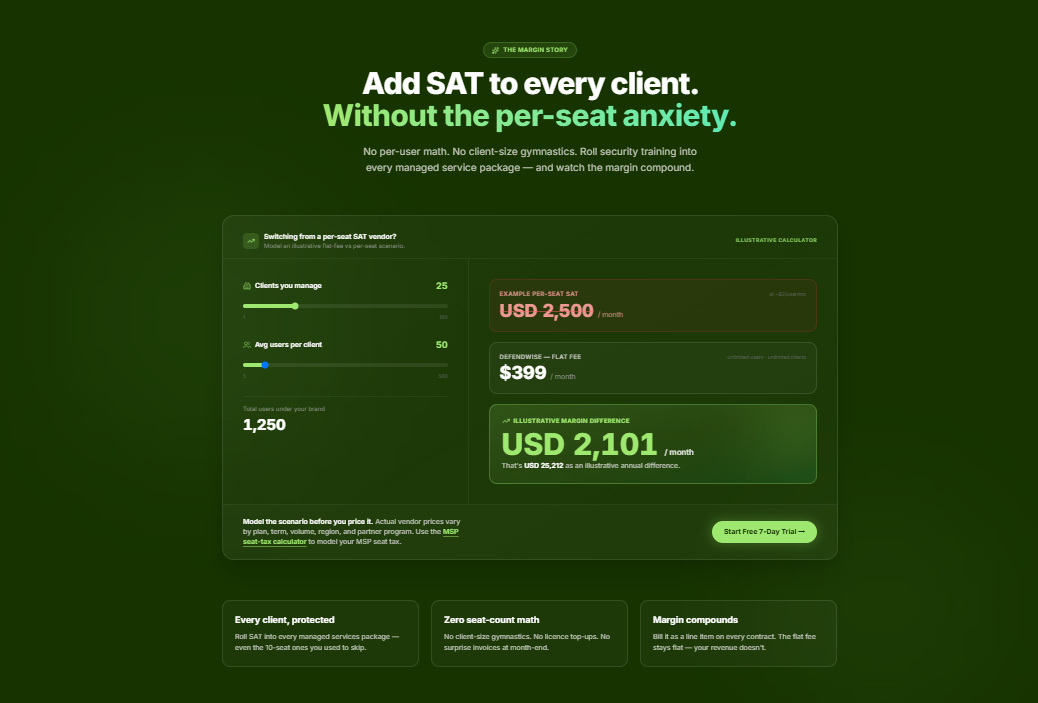
White label delivery is another advantage when you want to strengthen your brand relationship with clients. Instead of presenting generic security materials, you can deliver training under your own identity, reinforcing that you’re the trusted security partner. Automated training workflows also reduce the chance of missed schedules, ensuring that security awareness remains an ongoing practice rather than a one-time initiative.
Conclusion
When you can show improvements in user response and reduce common security friction, training becomes a service clients understand and want to renew. DefendWise provides automated training and phishing awareness with white label delivery and multi client management to simplify security education for MSPs. By centralizing administration and supporting consistent learning experiences across clients, it helps teams focus on remediation and advisory work. For MSPs seeking a benefits-led approach to security awareness, DefendWise is a practical option that aligns with how managed services operate.