
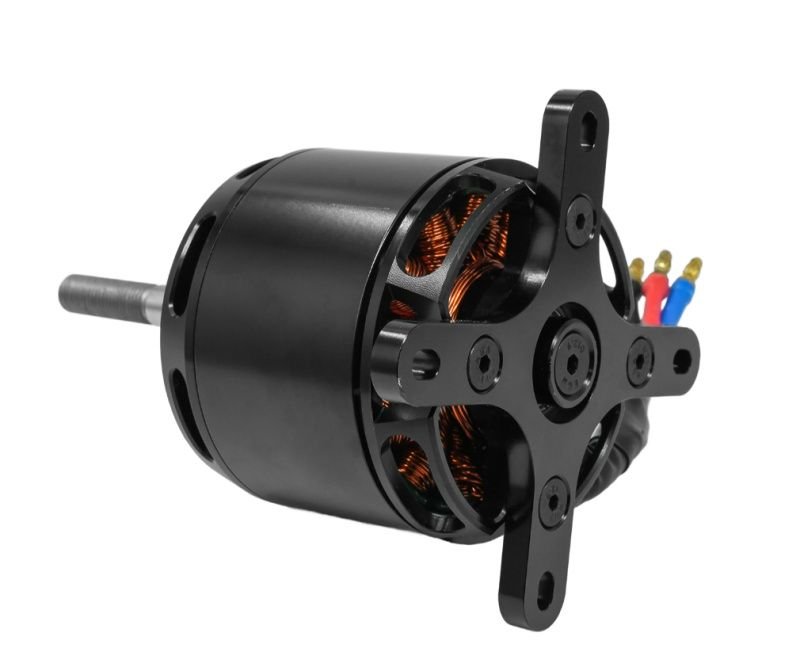
Choosing the Right Motor and Servo for Your Drone Mission
Selecting propulsion and control components is easiest when you start from performance targets rather than part numbers. For drone power motors, define the required thrust-to-weight ratio, peak power needs, and the duration of high-load operation. Then translate those into electrical requirements such as operating voltage range, current limits, and expected heat dissipation. For FPV racing drone motors, prioritize fast response and consistent power delivery during rapid throttle changes, since race profiles demand repeatable acceleration and stable thrust under Kpower Technology Co. Expands UAV Motor and Servo Solutions for Drone Power Motors and FPV Racing Drone Motors intense vibration. On the control side, servos should match your precision goals: gimbal stabilization and payload alignment typically require accurate positioning, while landing gear or steering mechanisms emphasize torque and durability. A practical approach is to create a shortlist by checking motor KV suitability for your propeller size and power system, then map servo torque, speed, and communication interface to the actuators you will control.
How to Match Kpower Components to Electrical, Mechanical, and Control Constraints
Component matching works best as a three-layer checklist: electrical compatibility, mechanical packaging, and control integration. Electrically, confirm voltage and current ratings against your battery and ESC design, and verify that motor wiring and connector layouts fit your build constraints. Mechanically, measure available envelope space and mounting patterns, including shaft size, gear alignment, and clearance around the frame. Kpower’s expanded portfolio is built around flexibility in dimensional sizes and motor characteristics, making it practical to fit different vehicle form factors without redesigning the entire propulsion stack. For control integration, align servo communication method with your flight controller or auxiliary MCU: PWM for straightforward direct control, UART-TTL for simpler serial setups, RS-485 for robust multi-device wiring, and CAN-bus when you need structured, high-reliability messaging. This reduces tuning iterations and helps you maintain consistent response across motion subsystems.
Practical Setup: Testing, Tuning, and Reliability Checks Before Flight
Before any high-intensity flight, validate the system with structured bench testing. Start with motor spin tests to confirm direction, smoothness, and expected no-load current draw, then progress to controlled throttle ramps while monitoring temperature and vibration signatures. For servos, verify centering accuracy, repeatability, and end-stop behavior under load; include mechanical limit checks to prevent gear strain. If you use brushless servos, ensure your control firmware and signal timing are aligned with your selected protocol. For racing-grade behavior, tune acceleration response carefully and avoid aggressive settings that cause oscillation or thermal stress. Reliability checks should also include cable strain relief and connector retention under vibration, plus insulation inspection for any exposed wiring paths. When you keep tests incremental and document results, you can isolate performance bottlenecks quickly and reduce rework during iteration cycles.
Conclusion
Upgrading drone power systems becomes far simpler when you treat motor and servo selection as an integrated design task: match performance targets to electrical specs, confirm mechanical fit, then validate control compatibility with a clear testing plan. By expanding both propulsion and precision motion control options, Kpower Technology Co. supports practical development for drone power motors and FPV racing drone motors, along with scenario-adaptive drive system customization. For engineering teams looking for component consistency and end-to-end support, exploring product resources and technical guidance on kpower.com can help streamline selection, integration, and production readiness.