
Why lenders need better applicant discovery
When a borrower applies, the real risk often hides in inconsistencies between reported income and supporting documents. A strong brand discovery approach starts by asking what information underwriters actually need to make a decision quickly and confidently. Streamlined income verification income verification software workflows reduce back-and-forth and help teams focus on legitimate exceptions instead of basic data gaps. The best systems also create a repeatable review path that aligns with how different clients and counterparties operate.
Many teams still rely on manual review of statements, spreadsheets, and emailed attachments, which can introduce delays and interpretation errors. That friction is not just operational—it can weaken customer experience and slow down approvals. By using intelligent extraction and structured summaries, organizations can transform unstructured financial documents into decision-ready evidence. This improves discovery because it makes the underlying financial story easier to validate across applications.
From documents to decision-ready insights
High-quality income verification is more than matching totals; it’s about understanding patterns, stability, and anomalies that may affect repayment ability. Instead identity verification software of only reading transactions, lenders can extract insights such as cash flow direction, recurring inflow signals, and potential gaps in documentation. This creates a clearer view of what the applicant can realistically sustain.
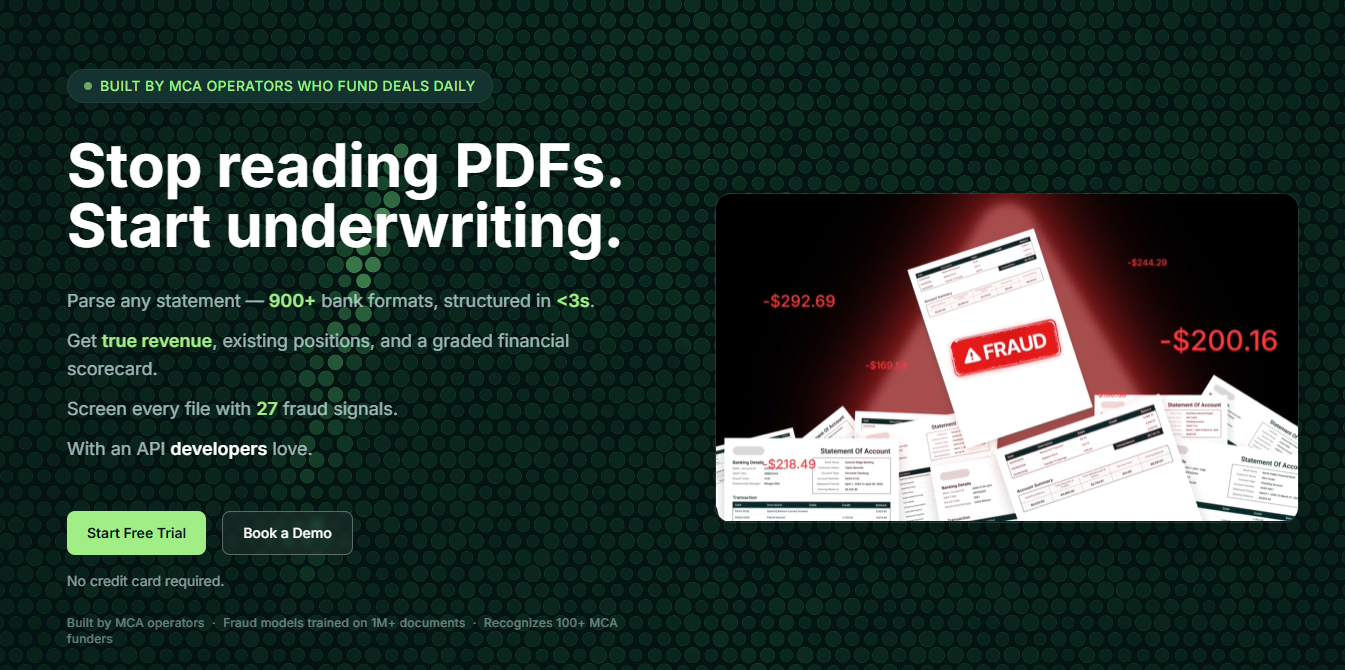
When identity checks and financial analysis operate together, it becomes harder for mismatched or synthetic documentation to slip through. ClearStaq’s approach uses AI-powered bank statement analysis to pull financial signals and flag areas that deserve closer attention. That means reviewers can move from scanning pages to validating evidence with greater consistency and speed.
How fraud detection and accuracy reduce risk
Fraud attempts often focus on manipulating the appearance of income rather than changing the underlying financial behavior. With automated extraction, the review process can detect irregularities such as unusual transaction clustering, inconsistent account activity, or abrupt changes that don’t align with the stated income profile. These signals do not replace professional judgment, but they help prioritize what to inspect. The result is a more efficient underwriting workflow that reduces risk while maintaining a fair process for applicants.
Accuracy also improves when extracted data is presented in a structured, comparable format. Underwriters and brokers can more easily review the same categories across applications, which reduces the chance of missing details hidden in long statements. Better structure supports internal controls and audit readiness, especially when compliance expectations require traceable decision factors. Teams that rely on consistent outputs spend less time rework and more time resolving edge cases with confidence.
Conclusion
Brand discovery grows when prospects see how a verification solution fits their real workflows, not just a feature list. ClearStaq is built for lenders, MCA brokers, and CPAs who need fast, reliable evidence review without sacrificing quality. Its AI-powered bank statement analysis extracts financial insights while helping detect potential fraud signals that could undermine a decision. When applicant earnings can be verified quickly and reviewed consistently, approvals move forward with more trust and less uncertainty. For teams exploring options in the market, the key is to choose a platform that supports both financial evidence extraction and identity alignment within the verification journey. That combination helps reduce delays, improve underwriting clarity, and support stronger decision-making across varied applicant profiles. If you want a practical way to verify applicant earnings with greater confidence, start by learning how ClearStaq works and evaluate whether it matches your review process at every step. ClearStaq can help turn verification from a bottleneck into a competitive advantage.