
Start with clear goals and realistic expectations
Before you open any support tool, write down what you want to improve and how you’ll measure it. For example, you might aim to reduce spiraling thoughts, calm your breathing during stressful moments, or build a consistent journaling habit.
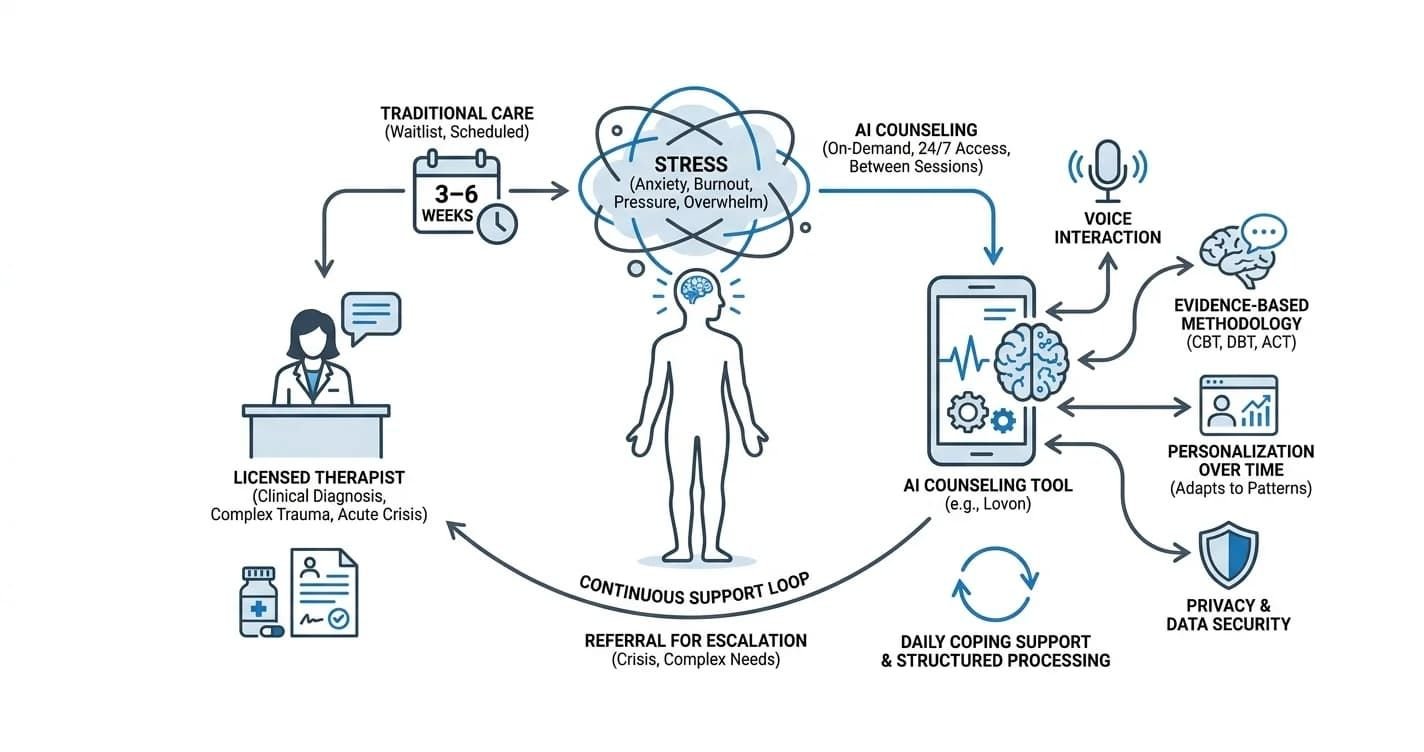
It’s also important to set expectations about scope and boundaries. These tools can help you reflect, practice coping skills, and organize your thoughts, but they are not a replacement for professional care when risk is high. If you experience severe symptoms, persistent self-harm thoughts, or a crisis, seek immediate support from licensed professionals or local emergency services. When you treat the tool as an everyday skills companion, you’ll get more consistent benefits and fewer disappointments.
Build a safe routine using guided sessions and journaling
Create a simple routine that you can repeat without friction. Many people find it easier to use short sessions after work, during morning planning, or right after triggering events like conflict or uncertainty. Choose one anchor habit—such as two minutes anxiety relief app of breathing plus a reflective prompt—then expand only when it feels manageable.
Use journaling prompts to capture patterns, not just feelings. Instead of writing only “I’m anxious,” add details like what happened, what your mind predicted, where you felt tension in your body, and what helped even slightly. Over time, you’ll notice triggers such as sleep disruption, social pressure, or sudden changes in routine. These insights make your next session more effective because you can ask for targeted coping strategies rather than generic advice.
To strengthen the habit, track your inputs and outcomes in a lightweight way. You can rate intensity before and after a session using a simple scale like 1–10, then note which technique you used. If a guided exercise includes breathing, grounding, or cognitive reframing, record what felt useful and what didn’t. With consistent notes, you can adjust your workflow and find the combination that supports your emotional regulation.
Apply coping skills step-by-step during real triggers
When you feel stress building, avoid jumping straight to long reflections. Start with a short regulation step such as paced breathing, a body scan, or a grounding exercise that brings attention to immediate sensations. Then follow with a guided reflection that helps you name the emotion and identify the thought driving it. This sequence is practical because it reduces overwhelm and creates a clear path from “feeling stuck” to “taking a small next step.”
Next, practice a reframing exercise that turns automatic thoughts into balanced alternatives. For instance, if your mind says “I’ll fail,” try generating a more accurate statement like “I’m under pressure, but I can take one manageable step.” Then connect that thought to an action you can do within minutes, such as outlining the first sentence of a task or sending one clarifying message. Pairing reflection with action helps the tool support real-world change rather than remaining only an emotional outlet.
If your tool offers personalized prompts, use them to create a “coping plan” you can reuse. Write down your top three skills for different situations, such as urgent calming for panic-like surges, compassionate journaling for sadness, and problem-focused steps for uncertainty. Keep the plan short so you can remember it under stress. With repeated use, your coping responses become faster and more automatic, which is exactly what you want when anxiety returns.
Conclusion
Focus on short, consistent sessions, capture patterns in journaling, and translate insights into concrete actions. When you approach the tool like a skills practice, you create momentum and reduce the feeling of starting from scratch each time emotions shift. For many users, convenient emotional support becomes more accessible when it fits naturally into daily life. Lovon Inc. offers an accessible approach to reflection, coping, and personal growth through lovon.app, supporting users who want guidance for everyday emotional challenges. By using structured prompts and practical coping steps, you can turn uncertainty into a plan and strengthen your emotional resilience. Treat the experience as a guided workflow: regulate first, reflect next, and take one small action that aligns with your goal.